Define how each ingredient is bought so the app can recommend realistic purchases later.
Ingredient planning software that helps bakers shop with actual demand in mind.
BatterBee connects pantry ingredients, pack sizes, stock levels, recipe usage, and upcoming orders so the shopping list stops being guesswork. Instead of buying from memory, the baker can see what is short, what to buy, and roughly what it will cost.
This part of the app asks for a little more setup up front, but it pays that effort back by tying ingredient planning to the work that is actually coming. The goal is not warehouse management. It is calmer bakery shopping, clearer shortage visibility, and less late-stage scrambling.
Low-stock warnings and shopping suggestions are tied to actual upcoming bakery work.
Quick buys stay fast, but the workflow still handles awkward real-world pack sizes.
Less “I think we have enough”, less last-minute running around, less shopping from memory.
BatterBee helps the baker move from reactive shopping to more deliberate planning without turning the bakery into an inventory spreadsheet exercise.
Buying from memory
Shopping often becomes a rough mental checklist rather than something tied to what the bakery actually needs next.
Late-realised shortages
Some missing ingredients only become obvious when the baker is already close to production time.
Pack sizes that do not match the recipe
Buying is usually done in tubs, bottles, or packets, while recipes consume grams, millilitres, and individual units.
Two different shopping lists
Baking needs and ordinary household items often end up tracked separately when they could be managed in one place.
A simple chain: set up the pantry properly, let upcoming work expose shortages, then shop from a list with context.
This page leans into a denser, checklist-style rhythm because ingredient planning is operational. The value comes from how these small pieces connect, not from one glamorous screen on its own.
Set up ingredients in the pantry with realistic buying detail
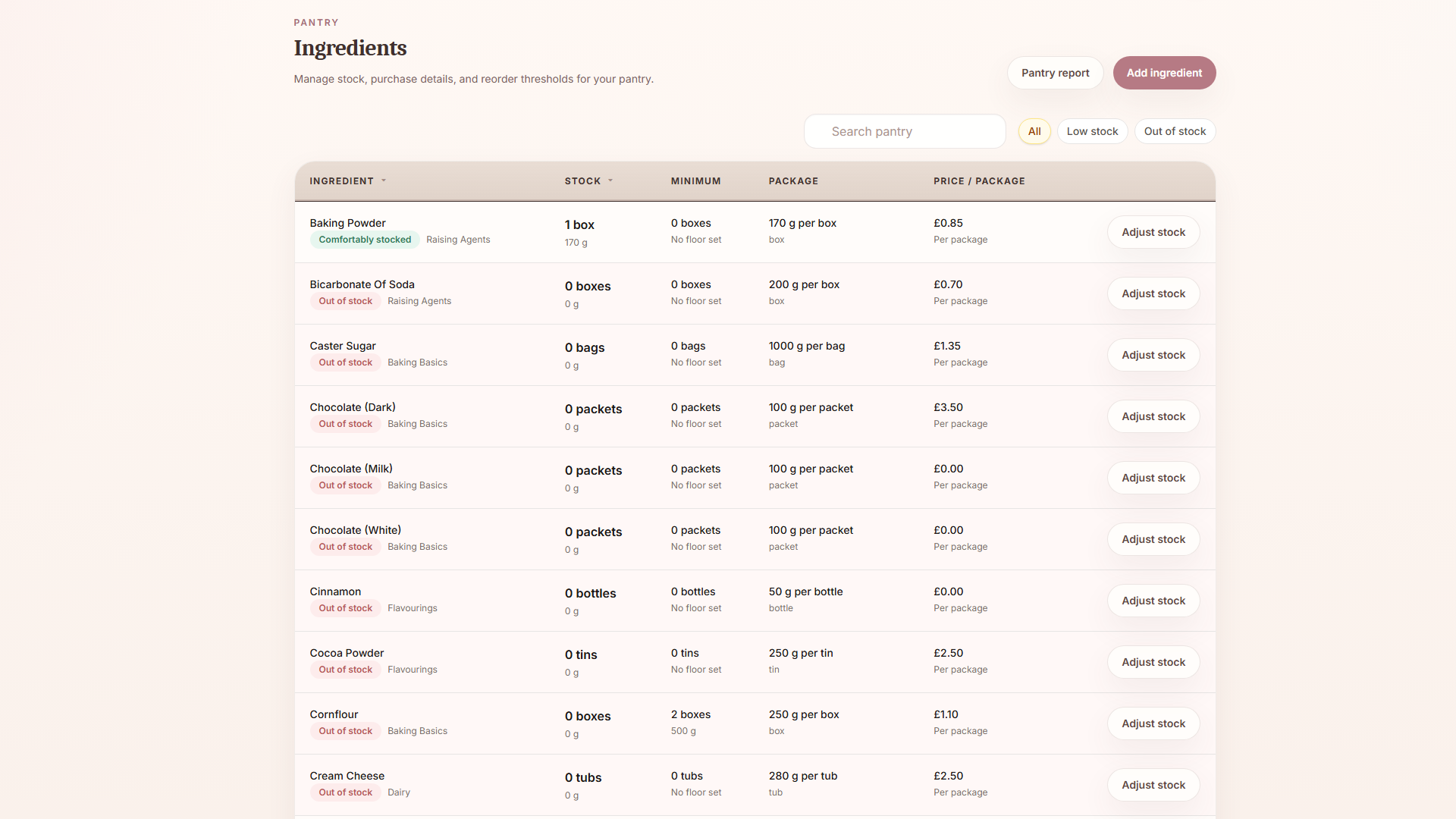
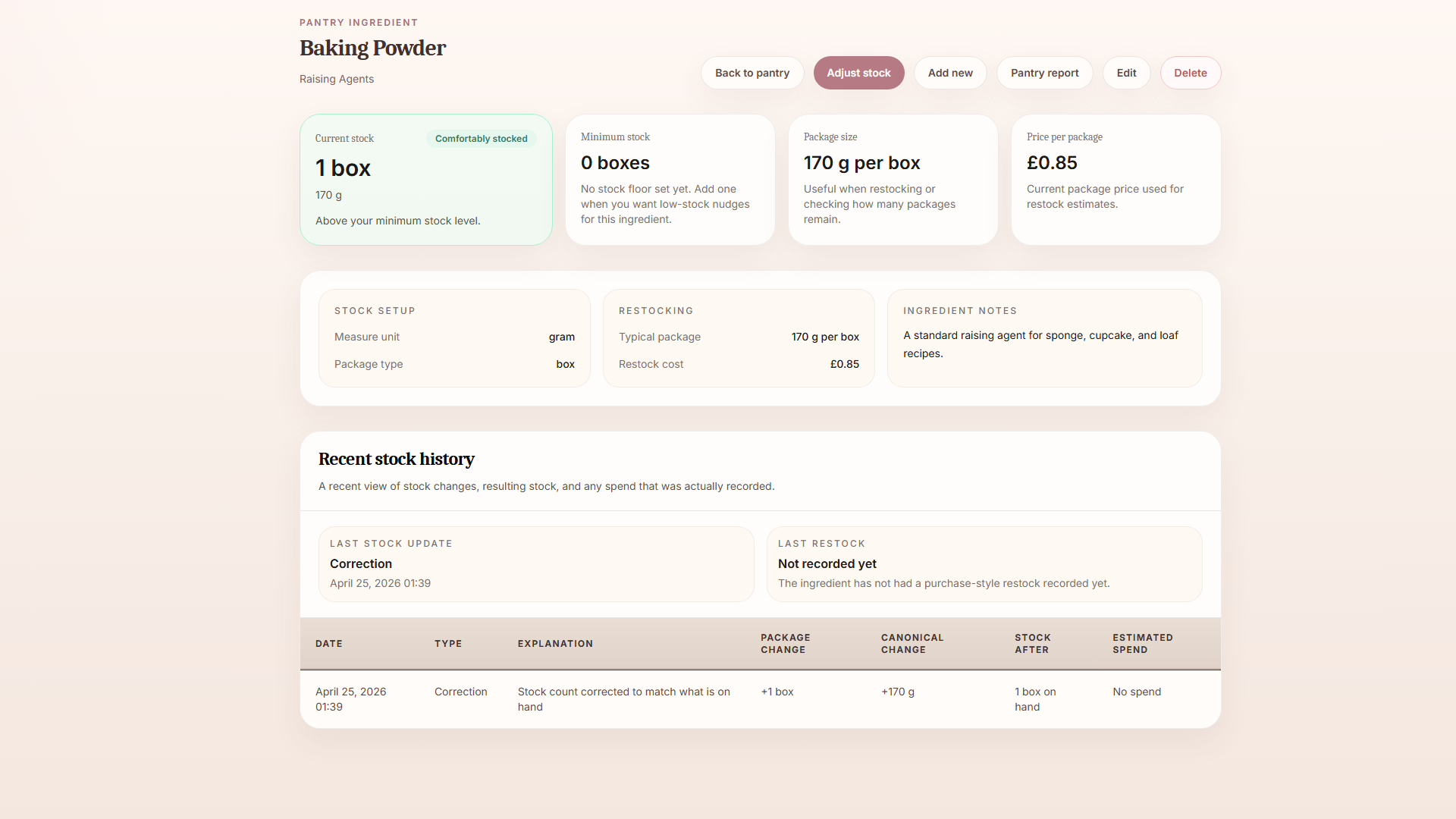
Ingredients are more useful when they carry the context of how they are actually purchased: package type, unit, quantity per pack, current stock, and rough cost.
- Track category, stock units, and how the item is bought in the real world.
- Give the app enough information to recommend meaningful purchases later.
- Use minimum quantities and planning windows to reflect how the bakery actually runs.
Keep the pantry visible as a working ingredient list, not just a hidden setup screen
Once ingredients are set up, the pantry view becomes the working reference point for stock, price, package context, and current availability across the bakery.
- Review what is currently in stock and what is starting to run low.
- Use category and packaging context to keep the pantry more understandable.
- Build the costing side of the app from data that is grounded in actual ingredient setup.
Let the upcoming orders surface the shortages instead of discovering them too late
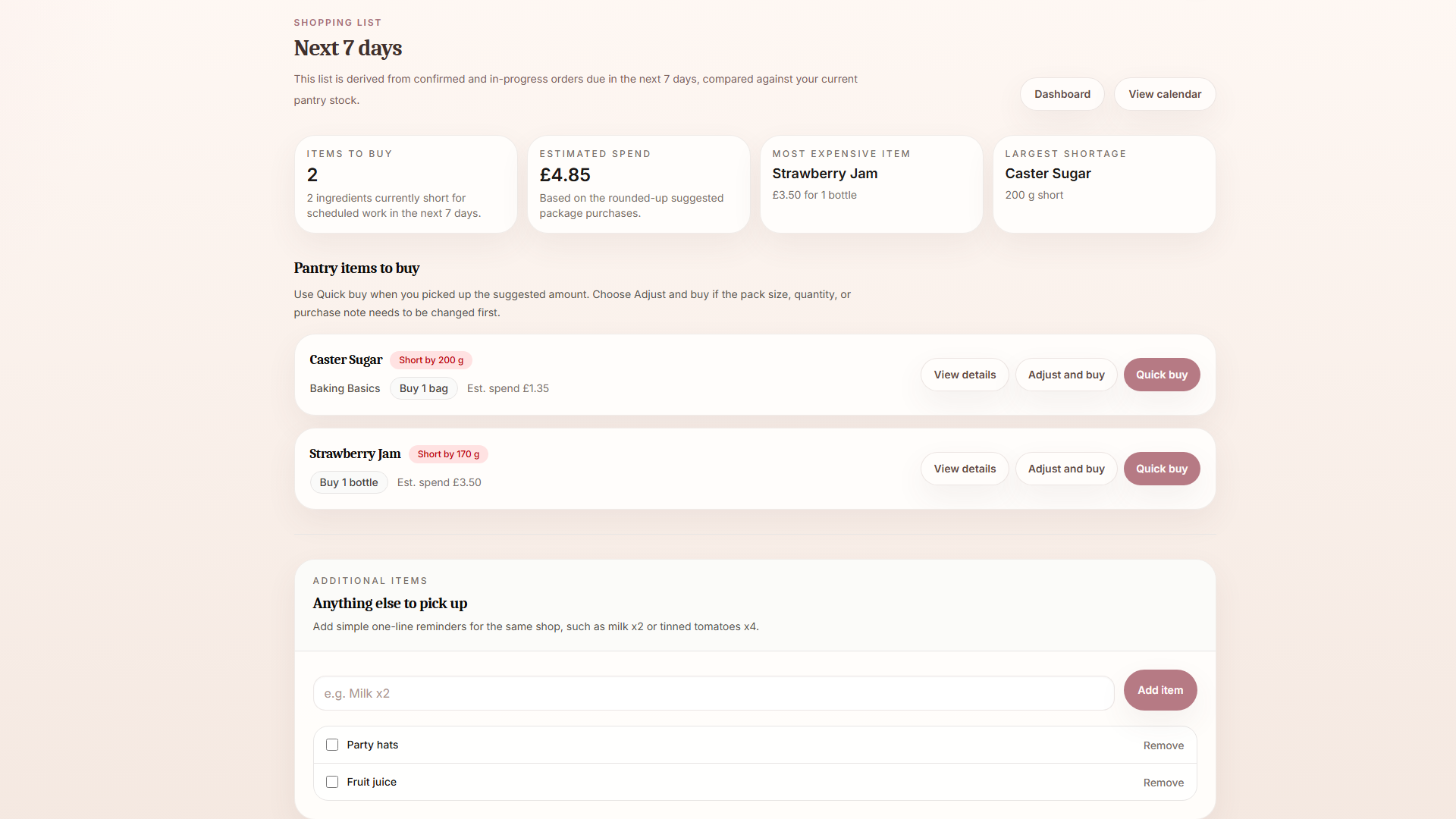
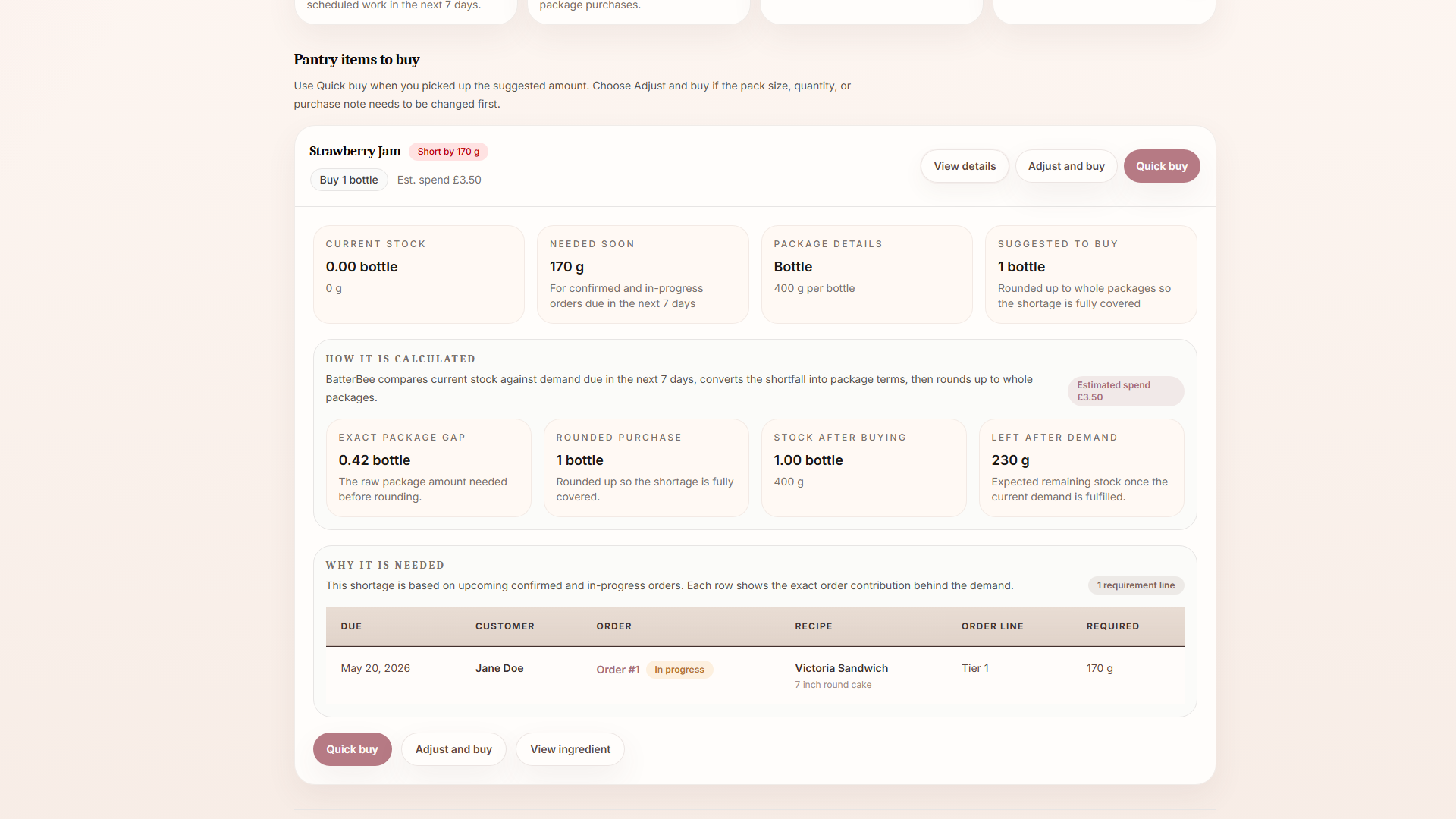
The shopping list is tied to real upcoming bakery work, so shortages can be seen in advance rather than guessed from memory or noticed only when production is already close.
- See what is short, how short it is, and what the app recommends buying.
- Get a rough spend overview instead of a list with no commercial context.
- Keep non-baking additional items in the same list for one simpler shopping run.
Record what was actually bought, not just what the app ideally suggested.
Shopping reality does not always match the suggested pack size. BatterBee keeps a fast path for straightforward buys and an adjustment path for when the shop’s packaging does not line up neatly with the original pantry setup.
Quick buy for the common case
When the suggested purchase is exactly what the baker bought, the item can be handled quickly without extra friction.
Adjust and record for the messy real-world case
If the bakery buys a different pack size or quantity than expected, the purchase can be adjusted before being recorded so stock remains trustworthy afterwards.
- Keep the pantry aligned with what came home from the shop.
- Show bought items separately so they can be reviewed or undone.
- Support a shopping workflow that is fast without becoming brittle.
A calmer shopping routine and a stronger base for costing the rest of the app.
Ingredient planning is not just about avoiding empty shelves. It also supports recipe costing, quote confidence, and the baker’s ability to trust what the app is telling them.
Buy with context
Shopping suggestions are tied to actual order demand rather than vague intuition.
Keep stock and pricing connected
The same ingredient setup supports both pantry planning and recipe-level cost visibility.
Use one list for more than just baking goods
Additional items make it practical to keep ordinary shopping reminders beside the bakery list.
Useful when setting up the pantry, useful again every time the next shop comes around.
BatterBee turns ingredient setup into something operationally useful later on. The pantry, shortage detection, and shopping list all work together so the bakery can buy more deliberately and bake with fewer surprises.